
Gomti Nagar, Lucknow Call +91 99355 71751 Viram Khand · Vipul Khand
Contact
Sai Specialized Dental Hospital

Gomti Nagar, Lucknow

+91 99355 71751

+91 92351 79344

0522 230 4506

Viram Khand
1/264, opposite Bank of Baroda and Dr Soni Clinic, Viram Khand, Gomti Nagar, Lucknow, Uttar Pradesh 226010

Vipul Khand
Gomti Nagar, Lucknow

Contact and appointment information

Blog

  • Root Canal Treatment in Gomti Nagar: Assessment Guide

    Root Canal Treatment in Gomti Nagar: Assessment Guide

    Root Canal Treatment in Gomti Nagar: Assessment Guide

    Root canal assessment · Gomti Nagar, Lucknow | Patient guide

    Root Canal Treatment in Gomti Nagar: What Assessment Involves

    A suggestion of root canal treatment can raise understandable questions: What did the dentist find? What does an X-ray show? Are there other options? Assessment helps the clinician investigate the tooth and explain the reasoning behind a recommendation. It is a process of gathering information, not an online diagnosis or automatic commitment to treatment.

    Important: decisions about treatment depend on a professional examination of your tooth and relevant records. This guide provides general information only and cannot replace advice from a dental clinician.

    At a glance: what an assessment helps clarify

    Why a tooth needs closer evaluation

    The clinician considers your symptoms, dental history, examination findings, and imaging where indicated. No single symptom or image alone necessarily settles the diagnosis.

    What you can bring

    Note symptoms, previous treatment, medicines, allergies, and questions. Bring relevant dental records or images if available.

    Your role

    Describe what you experience and ask the clinician to explain findings, alternatives, uncertainties, and next steps in plain language.

    Why assess a tooth before recommending root canal care?

    Inside each tooth, beneath the hard outer enamel and dentine, is soft tissue containing nerves and blood vessels, commonly called the pulp. Deep decay, a crack, trauma, or repeated dental procedures can affect this tissue. When pulp becomes inflamed or infected, root canal treatment may be one option to remove affected tissue, clean and shape the internal space, and seal it. Whether that option is appropriate depends on the tooth’s condition and the patient’s circumstances.

    Tooth pain does not point to one cause by itself. Sensitivity, discomfort when biting, lingering responses to temperature, or swelling can occur in different dental problems. Some teeth with significant damage may have few noticeable symptoms. Assessment helps distinguish possibilities, consider the tooth’s restorability, and decide whether further investigation is needed. Do not try to diagnose the tooth based on a symptom checklist.

    The dentist may also consider gum and bone support, the extent of decay or fracture, existing fillings or crowns, and how much healthy tooth remains. A tooth needs to be restorable and suitable for a durable final restoration for root canal treatment to make sense. The clinician may discuss other treatment choices, including monitoring in appropriate circumstances, restorative care without root canal treatment, or removal when a tooth cannot reasonably be retained. These options require individualized discussion.

    For people looking for root canal treatment in Gomti Nagar, a careful assessment is a chance to understand why a recommendation is being considered—not a promise that a procedure is necessary, painless, completed in a particular number of visits, or guaranteed to succeed. Ask what clinical findings support the recommendation and what remains uncertain.

    What a dental assessment may cover

    Consultations vary with the tooth, symptoms, prior care, and clinical findings. A dentist may ask when the concern began, what seems to trigger it, whether it has changed, and whether you have had recent injury or treatment. Share the details as you remember them; you do not need to interpret their meaning. Mention relevant health conditions, current medicines, allergies, and past reactions to dental care or medicines.

    Examination may include looking for decay, cracks, damaged restorations, gum changes, or signs of swelling. The clinician may examine the tooth and neighbouring structures and use appropriate tests to understand how the tooth responds. The selection and interpretation of tests belong to the clinician. A finding is considered alongside the rest of the examination rather than treated as a stand-alone answer.

    Your dentist may ask about your priorities and concerns, including anxiety, previous experiences, or questions about treatment choices. Tell the clinician if you need an explanation before an examination step or would like a pause. Clear communication helps the team understand what matters to you and lets you make informed decisions.

    Assessment may end with a recommendation, a request for additional records, or a plan to reassess after another issue is addressed. You can ask for time to consider options and for a written summary. A consultation does not obligate you to proceed with treatment.

    How dental X-rays can support clinical assessment

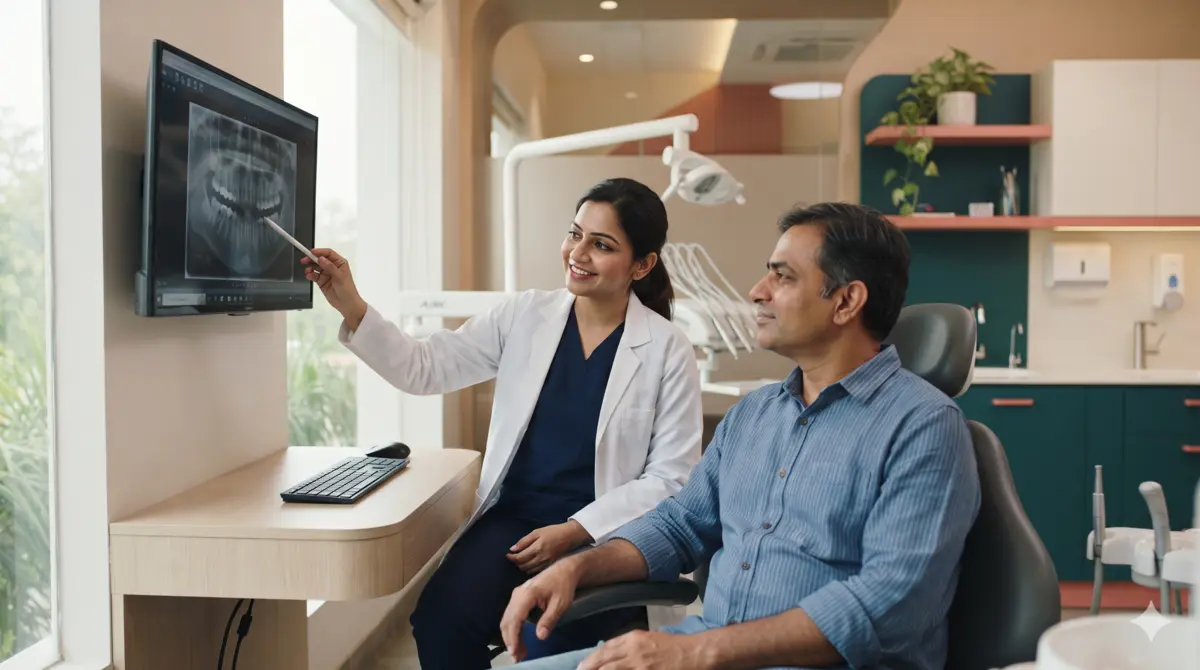
    Dental imaging can show structures that cannot be examined directly, including the roots and surrounding bone. An image may help a dentist assess the shape and number of roots, changes around a root tip, the depth or position of certain problems, and relevant anatomy. It adds information to clinical examination; it does not replace it. Images can have limitations, and a two-dimensional view may not show every detail or explain every symptom.

    Which image is appropriate depends on the clinical question. A dentist may consider an existing image if it is available and sufficiently current and useful, or recommend new imaging when justified. Ask what the image is intended to clarify and how it affects the discussion. Imaging recommendations should be individualized; not every patient needs the same views or additional scanning.

    Sai Specialized Dental Hospital lists Vatech RVG and digital X-Ray among its technologies. Equipment availability does not by itself determine diagnosis or treatment. The clinician interprets any image in context with examination findings and your history, then explains what it contributes to the decision.

    Clinical note

    An X-ray is one part of assessment. Ask how the image relates to the symptoms and examination, whether any uncertainty remains, and what other options should be considered. Only a qualified clinician who examines you can make an individual treatment recommendation.

    A practical roadmap for your appointment

    These steps describe common topics in a dental assessment, not a guaranteed sequence or a claim that every patient needs the same tests.

    01 · Describe the concern

    Explain what you have noticed, when it began, what changes it, and any previous dental treatment. Mention swelling, injury, or changes over time. The clinician needs your observations, not a self-diagnosis.

    02 · Review health and dental history

    Share relevant conditions, medicines, allergies, and past dental care. Bring a concise list if helpful. Tell the dentist about concerns that may affect how you experience an appointment or discuss care.

    03 · Examine and consider imaging

    The clinician examines the tooth and surrounding area, then decides whether tests or diagnostic imaging would help. Ask what each step is checking and how findings fit together.

    04 · Discuss options and next steps

    Ask why root canal treatment is or is not being recommended, what alternatives apply, whether more information is needed, and what restoration or follow-up might be involved. Confirm the plan before deciding.

    Questions patients may ask about their care

    Write down questions before visiting. The following prompts can help you understand your own assessment without assuming its outcome:

    About findings

    • What did you find during examination?
    • How do my symptoms and any imaging relate to that finding?
    • What remains uncertain, if anything?
    • Is additional assessment or another opinion reasonable?

    About choices

    • Why are you recommending this option for my tooth?
    • What alternatives apply, and what are their limitations?
    • Can the tooth be restored after the proposed care?
    • What happens if I need time to decide?

    About practical care

    • What stages of care might be involved in my case?
    • What should I know about restoration and follow-up?
    • Which symptoms or changes should prompt me to contact the clinic?
    • Whom should I contact if I have questions afterward?

    Understanding possible care discussions

    The table below offers questions to guide a conversation. It is not a treatment selector. The clinician’s recommendation depends on examination and the condition of the specific tooth.

    Topics to clarify when discussing a tooth that may need root canal assessment
    Discussion areaWhat it helps clarifyQuestion you can ask
    Root canal treatmentWhether internal treatment may be appropriate and what restoration may be needed afterwardWhat findings support this option for my tooth?
    Other restorative careWhether the problem may be managed without treating the pulp, depending on findingsWhat alternatives are reasonable in my situation?
    Further assessmentWhether more information or review is needed before making a decisionWhat are you trying to confirm, and what comes next?
    Tooth removal discussionWhether the tooth can be retained or whether removal should be consideredWhy might this option be considered, and what follows?

    Seeking root canal assessment in Gomti Nagar, Lucknow

    Sai Specialized Dental Hospital is in Gomti Nagar, Lucknow, and lists root canal treatment among its services. The clinic brief names Dr. Rahul Tiwari and Dr. Sumi Tiwari. Patients seeking a root canal dental assessment in Lucknow can read about the clinic’s root canal treatment service and use its contact page to ask about consultation arrangements.

    When contacting the clinic, describe that you would like an assessment and ask what records to bring. Appointment availability and the appropriate next step should be confirmed directly with the clinic. Do not rely on a web article to determine whether a specific tooth needs treatment.

    The most useful consultation leaves you with an understandable explanation of the examination, the role of any imaging, options relevant to your tooth, and a clear way to ask further questions. You remain part of the decision-making process.

    Root canal assessment FAQ

    Does tooth pain always mean I need root canal treatment?

    No. Pain can have different causes, and symptoms alone cannot establish the diagnosis. A professional examination, with imaging when indicated, helps the dentist assess what is happening and discuss suitable options.

    Does every assessment need an X-ray?

    Not necessarily. The dentist decides whether imaging is useful for the clinical question. Ask what a recommended image may show and how it will inform the assessment.

    Can an X-ray confirm everything about a tooth?

    No single image provides every detail or replaces examination. The clinician interprets imaging alongside your history, symptoms, and clinical findings, and may explain any limitations.

    Should I decide on treatment during the first appointment?

    That depends on your circumstances and the information available. You can ask questions, request a clear explanation, and take time to consider a plan. Treatment decisions depend on professional examination and discussion with your clinician.

    Start with an informed conversation

    For a personal recommendation, arrange professional assessment rather than relying on symptoms or online information alone. Sai Specialized Dental Hospital’s contact page can help you ask about consultation arrangements in Gomti Nagar.

    Contact the clinic

    General patient education only. It does not diagnose a tooth or replace examination and advice from a dental professional.
    Read about root canal treatment

  • Dental Implants in Gomti Nagar: Consultation Guide

    Dental Implants in Gomti Nagar: Consultation Guide

    Dental Implants in Gomti Nagar: Consultation Guide

    Dental implant consultation · Gomti Nagar, Lucknow | Patient guide

    Dental Implants in Gomti Nagar: Consultation Guide

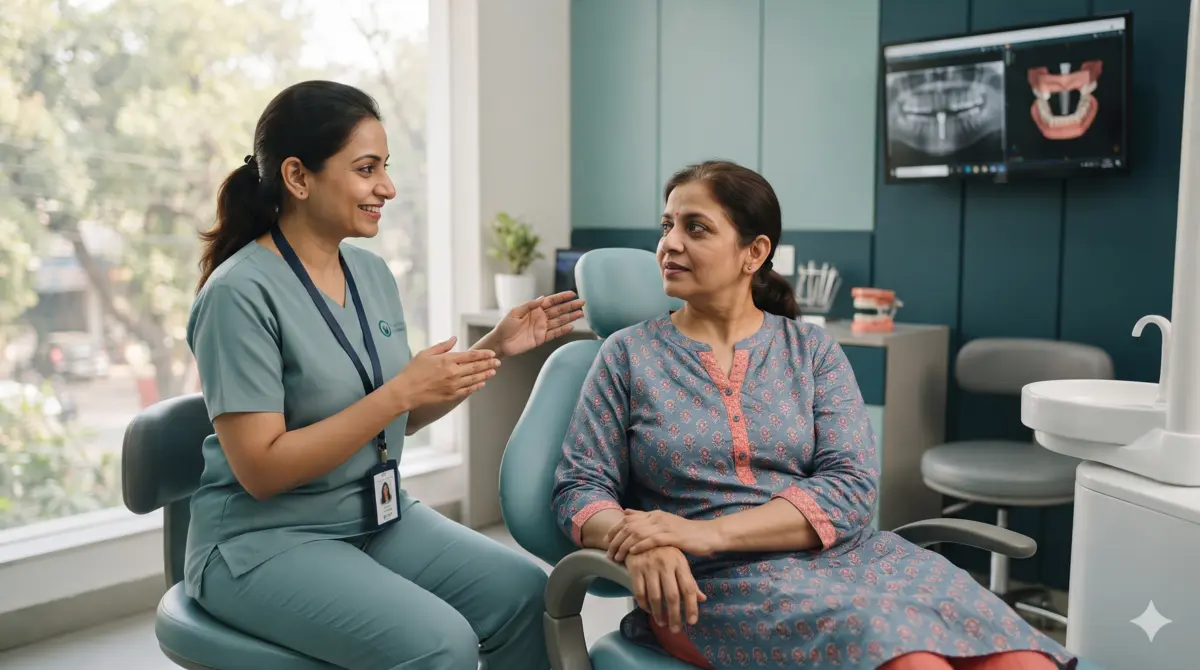
    A good implant consultation is a conversation and an examination—not a commitment to treatment. It helps you understand whether an implant could address your particular missing-tooth concern, what further assessment may be needed, and what alternatives exist.

    General information only: this article is not a diagnosis or medical advice. Only an examining dental clinician can discuss findings and options for your mouth.

    At a glance: what consultation should clarify

    Understand your tooth-replacement choices

    Discuss the gap, nearby teeth, bite, oral health, and whether an implant, bridge, removable option, or another approach merits consideration.

    Bring useful context

    Share relevant medical and dental history, medicines, allergies, prior imaging, and your priorities.

    Leave with a clear next step

    Ask what the clinician has assessed, what remains uncertain, and what follow-up or records are needed before a plan is finalized.

    What is a dental implant?

    A dental implant is a small post, commonly made from titanium or another biocompatible material, placed in the jaw to support a replacement tooth. After healing and integration with surrounding bone, a connector and a crown may be attached. Depending on the case, implants can also support a bridge or a denture. The exact design and sequence vary; not every missing tooth is treated the same way.

    Implants replace tooth roots in a way that differs from a conventional bridge, which generally relies on support from neighbouring teeth, and from a removable prosthesis that can be taken out. Each option has benefits, limitations, maintenance needs, and clinical requirements. Your clinician should relate these trade-offs to your specific mouth rather than assume one solution fits everyone.

    Searching for dental implants in Gomti Nagar may produce many choices, but a clinic listing or general article cannot establish whether treatment is appropriate for you. Consultation connects broad information to your oral condition, health history, expectations, and capacity for ongoing care.

    Why individualized examination and planning matter

    Planning considers more than the visible space. The clinician may assess gum health, remaining teeth, bite, jaw anatomy, the condition of the proposed site, and the shape and appearance needed for a replacement tooth. The number and position of missing teeth can affect the options. Existing infection or untreated gum disease may need attention as part of an overall care plan.

    Medical history matters too. Conditions, medicines, previous treatment, smoking or tobacco use, and other health factors may affect healing or influence how the clinician plans care. Mention them honestly; do not stop or change prescribed medication for a dental appointment unless the prescribing clinician advises you to do so. If a condition is being managed by another healthcare professional, ask whether coordination is appropriate.

    Imaging may be discussed when clinically indicated. A dental examination and suitable images help the clinician evaluate structures that cannot be judged from appearance alone. The clinician can explain what imaging is recommended, why it is relevant, and whether existing records can help. Do not assume that every patient needs the same scan or that a particular scan guarantees a specific outcome.

    A plan may address preparation, timing, restorative design, maintenance, and follow-up. Some people need additional assessment or care before an implant decision can be made; others may discuss alternatives. A careful consultation makes uncertainty visible instead of making promises before the necessary information is available.

    A practical consultation roadmap

    The first visit is for understanding and planning. These stages describe topics commonly involved, not a guaranteed clinic protocol or a promise that every assessment will happen in one appointment.

    01 · Explain your concern

    Describe which tooth or teeth are missing, when the gap appeared, any prior dental treatment, and what matters most to you—comfort, appearance, chewing, convenience, or another priority. Share symptoms and concerns without trying to diagnose the cause yourself.

    02 · Review history and examine

    The clinician may review your health and dental history, ask about medicines and allergies, and examine your mouth. Questions about previous procedures, gum care, tobacco, or general health are part of understanding your individual circumstances.

    03 · Discuss records and options

    Ask what the examination shows and whether imaging or other records are needed. Discuss implant-supported treatment alongside reasonable alternatives, including what each involves, its limitations, and why it may or may not suit your situation.

    04 · Confirm next steps

    Before leaving, check what is known, what needs further assessment, and who to contact with follow-up questions. Take time to consider the information. A consultation does not require you to proceed with a proposed treatment.

    Questions to take to your dental implant consultation

    Patients often find it helpful to write questions down and bring a trusted companion if they want support. There is no need to cover every topic in one sitting; ask for explanations in plain language and request that important points be written down.

    Assessment and suitability

    • What did you find on examination?
    • What additional information or imaging, if any, would help you plan?
    • Are there oral-health issues that should be addressed first?
    • Which personal health factors could affect planning or healing?

    Options and process

    • What alternatives should I compare with an implant?
    • What are the stages in the option you are discussing?
    • Who would provide each part of care, and where?
    • What factors could change the sequence or timing?

    Risks, care, and follow-up

    • What risks and limitations are relevant in my case?
    • What discomfort or recovery considerations should I understand?
    • What home care and professional maintenance would be required?
    • How will follow-up and concerns after treatment be handled?

    How to prepare for a consultation in Gomti Nagar

    Before a dental implant consultation in Lucknow, gather a concise history rather than trying to reconstruct everything at the appointment. Bring a list of current medicines and known allergies, relevant medical information, and details of previous dental procedures. If you have recent dental images or written reports, ask the clinic whether to bring them; do not assume old images are suitable for current planning.

    Make a short note of what you want to improve and what worries you. For example, you might want to understand how a missing tooth affects your options, whether nearby teeth need attention, or what daily maintenance involves. Mention practical considerations that could affect attendance at follow-up visits. These are discussion points, not reasons to self-determine candidacy.

    If you are comparing providers, focus on whether explanations are understandable, whether alternatives and uncertainties are discussed, and whether you have a clear way to ask questions later. Avoid relying on guarantees, dramatic claims, or a single generalized timeline. The right plan depends on clinical findings that cannot be confirmed online.

    Sai Specialized Dental Hospital is located in Gomti Nagar, Lucknow, and lists dental implants as a service. Dr. Rahul Tiwari and Dr. Sumi Tiwari are named clinicians associated with the hospital. Patients can review the hospital’s dental implant information and use the contact page to ask about arranging a consultation. Confirm appointment details directly with the clinic.

    Compare approaches through questions, not assumptions

    There is no universally best tooth-replacement choice. The comparison below is a starting point for discussion, not a recommendation. Actual design and suitability depend on examination and the clinician’s assessment.

    Topics to discuss when comparing tooth-replacement approaches
    ApproachUseful consultation questionIndividual factors to clarify
    Implant-supported replacementWhat assessments and stages would this involve in my case?Jaw and gum health, medical history, restorative needs, maintenance
    Tooth-supported bridgeHow would this affect the neighbouring teeth?Condition of support teeth, span of gap, cleaning requirements
    Removable replacementWhat fit, use, and care should I expect?Comfort, stability, dexterity, cleaning, review needs
    Other or staged careIs it reasonable to treat another issue first or monitor the gap?Symptoms, oral health, personal priorities, clinical findings

    Dental implant consultation FAQ

    Does attending a consultation mean I have agreed to implant treatment?

    No. A consultation is an opportunity to discuss your concern, undergo an assessment, and consider options. You can ask for time to think, seek clarification, or discuss another approach.

    Will every consultation include a scan?

    Not necessarily. The clinician decides whether imaging is useful based on your circumstances and examination. Ask what information a recommended image would provide and whether existing records can help.

    Can I know the complete treatment plan before examination?

    General information can explain common treatment concepts, but a personal plan depends on clinical assessment and any necessary records. Until those details are reviewed, specific treatment decisions and timing remain uncertain.

    What should I bring to an implant consultation?

    Bring a list of medicines and allergies, relevant health and dental history, and available recent dental records. Prepare your questions and tell the clinician about your priorities and concerns.

    Plan a conversation, not a predetermined outcome

    For patients exploring dental implants in Gomti Nagar, the most useful first step is an individualized discussion that explains findings, alternatives, uncertainties, and ongoing care. Sai Specialized Dental Hospital provides implant information online; contact the clinic to ask about consultation arrangements. Bring your questions, share relevant history, and take time to understand any proposed plan.

    Contact Sai Specialized Dental Hospital

    This patient guide offers general information and does not replace examination, diagnosis, or advice from a qualified dental professional.

    Learn about dental implant care

  • Hello world!

    Welcome to WordPress. This is your first post. Edit or delete it, then start writing!